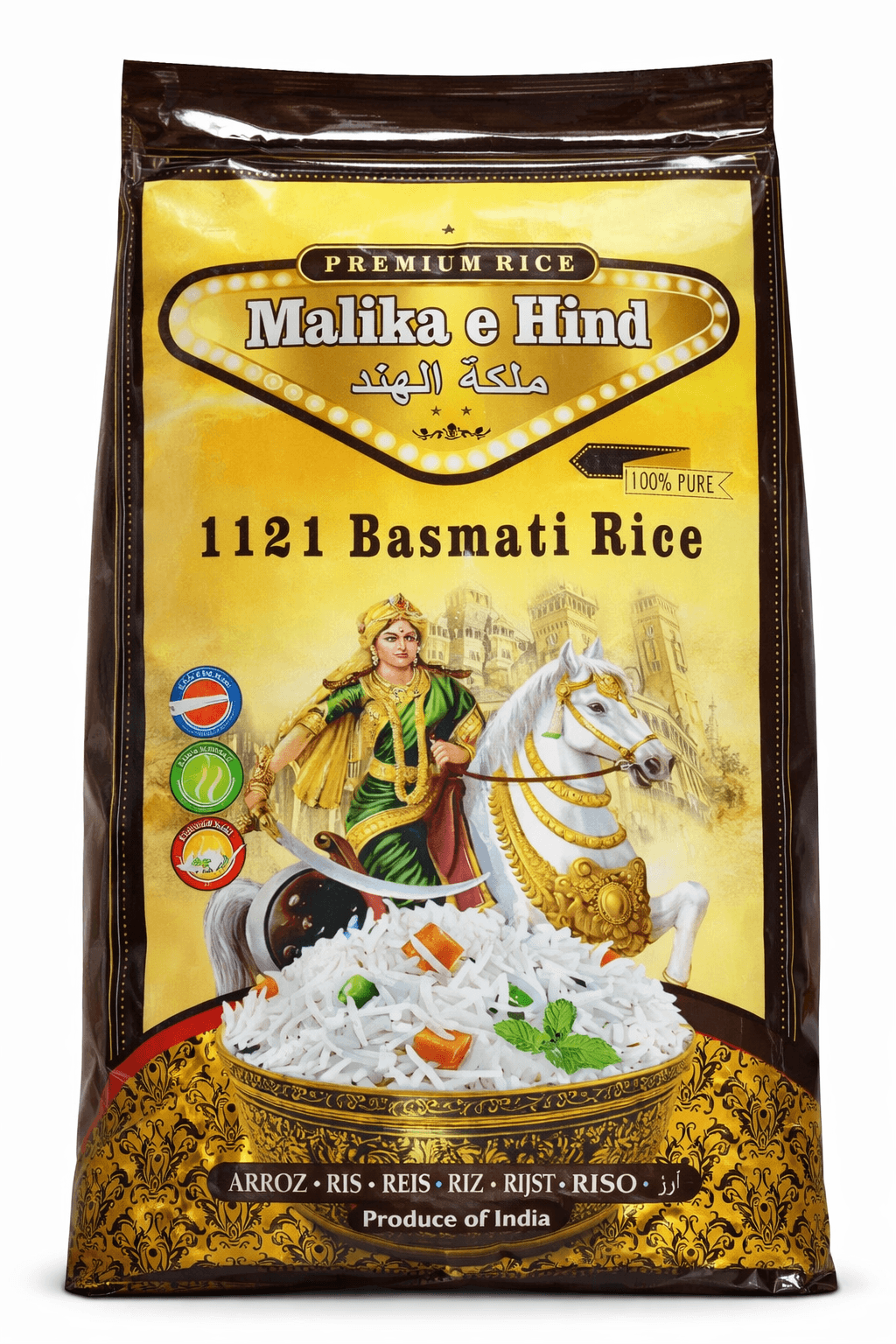
Malika e Hind 1121 basmati rice
From
View product€3.39
3 sizes available
Basmati rice, vegetable ghee, cooking oil, milk powder, dates: the 5 staple ingredients of Comorian cuisine, all available at SuqNaronane.
In the Comoros, rice is not a side dish: it is the heart of the meal. And for both celebrations and the daily life of the Comorian diaspora in France, it is always basmati rice that takes center stage: its long grains, airy texture, and lightly floral fragrance make it a natural fit for all preparations, from pilao to curries to m'tsolola.
At SuqNaronane, we offer a complete selection of premium extra-long basmati: Mahmood 1121 XXL, recognized for its particularly long grains and intense fragrance; Sultan Crown 1121, valued for its consistency; Malika e Hind and Royal Queen Classic, for everyday cooking. All are aged a minimum of 12 months to guarantee the non-sticky texture characteristic of true basmati.
Vegetable ghee is one of the most widely used cooking fats in the Comoros and throughout the Indian Ocean region. It is a clarified vegetable oil (free of water and milk proteins) that withstands very high temperatures (above 200°C) without degrading. Halal, lactose-free, and vegan, it suits all dietary needs. Its slightly buttery flavor and richness in carotenoids make it a key ingredient for searing meat, cooking pilao rice, or preparing sweets like basboussa.
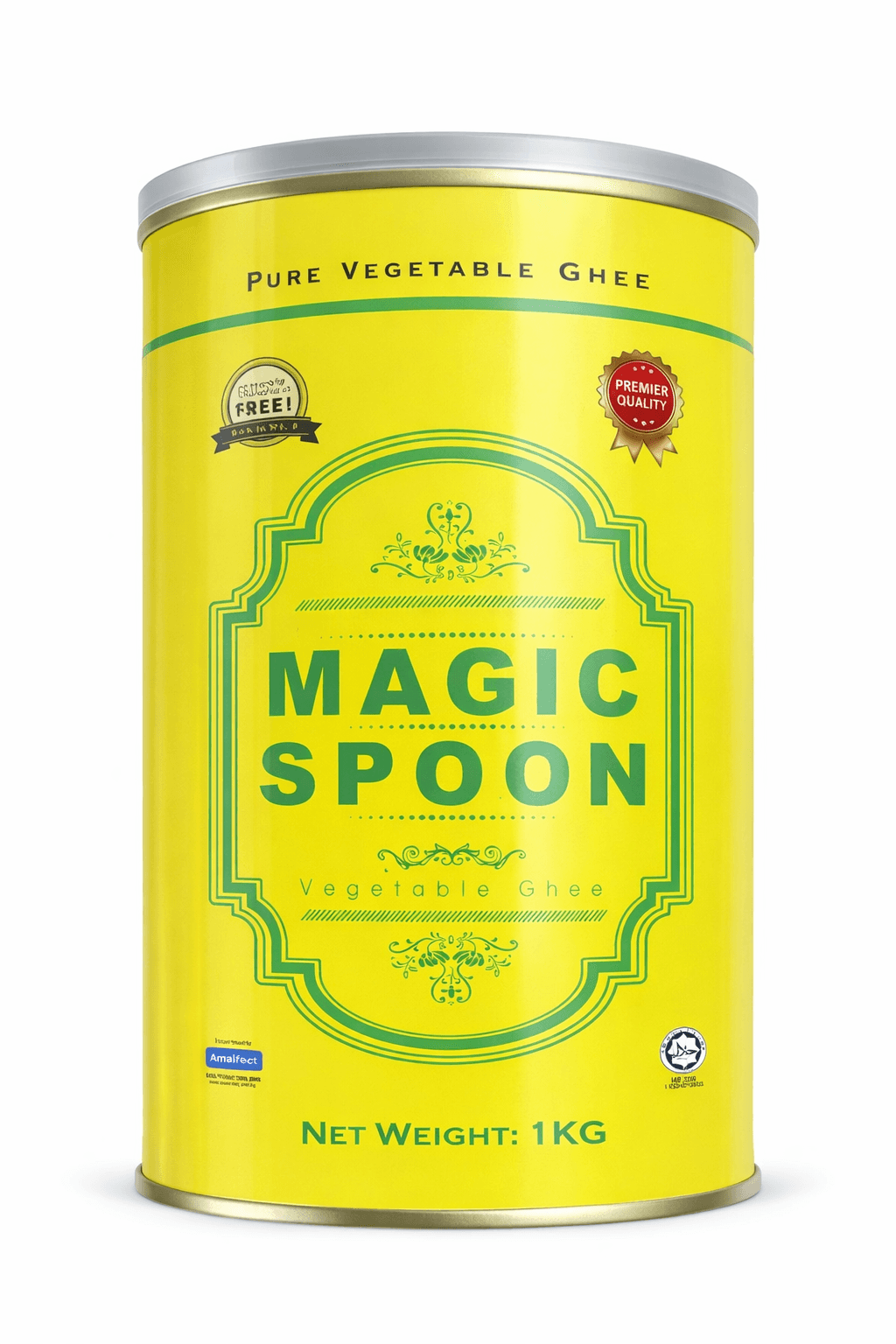
Our catalogue offers two quality references: Fork Spoon & Knife Vegetable Ghee, available in large family sizes, and Magic Spoon Vegetable Ghee, known for its golden color and neutral taste that makes it versatile. If you've never cooked with vegetable ghee before, start by using it to sauté onions and tomatoes at the beginning of a sauce: you won't be able to go back.
Alongside ghee for major preparations, vegetable oil remains the foundation of everyday Comorian cooking (frying, light dressings, quick sauces). Our range covers all needs: Indo and Jewel Vegetable Oil for high-volume everyday use; Filma and Rose Brand Cooking Oil for high-heat cooking; Oliva Special Vegetable Oil for preparations requiring a more neutral, lighter oil.
For lovers of Mediterranean cuisine and salads, we also offer Puget Extra Virgin Olive Oil 75cl and Safi Sunflower Oil, for dressings and light marinades. Our team's tip: always keep two oils in stock, one for high-temperature cooking and a finer one for finishing.
Milk powder occupies a special place in the Comorian pantry. Long shelf life, easy to store, economical in large quantities, it is a pantry staple always kept on hand. It is used to prepare morning coffee with milk, enrich a sauce, thicken a coconut dessert, or prepare a bottle for a baby. In the Comoros, it features in many sweet recipes: sweet fritters (mkatra foutra), thick crepes, and coconut-based desserts.
Our selection includes King's Milk Powder in convenient individual sachets (100 x 20g), Nura Whole Instant Milk Powder in a large 2,500g format for large families, and OKI Sweetened Condensed Cream for fans of African-style coffee. For daily use, Al Mudhish and Lait de France UHT whole milks complete the range with a ready-to-use liquid option.
Dates are a deeply rooted ingredient in Comorian and Muslim culture. They are the traditional snack to break the fast during Ramadan, but their use extends far beyond the holy month: they are enjoyed year-round as a naturally sweet and nourishing snack, used in desserts, date smoothies, or simply served with spiced tea.
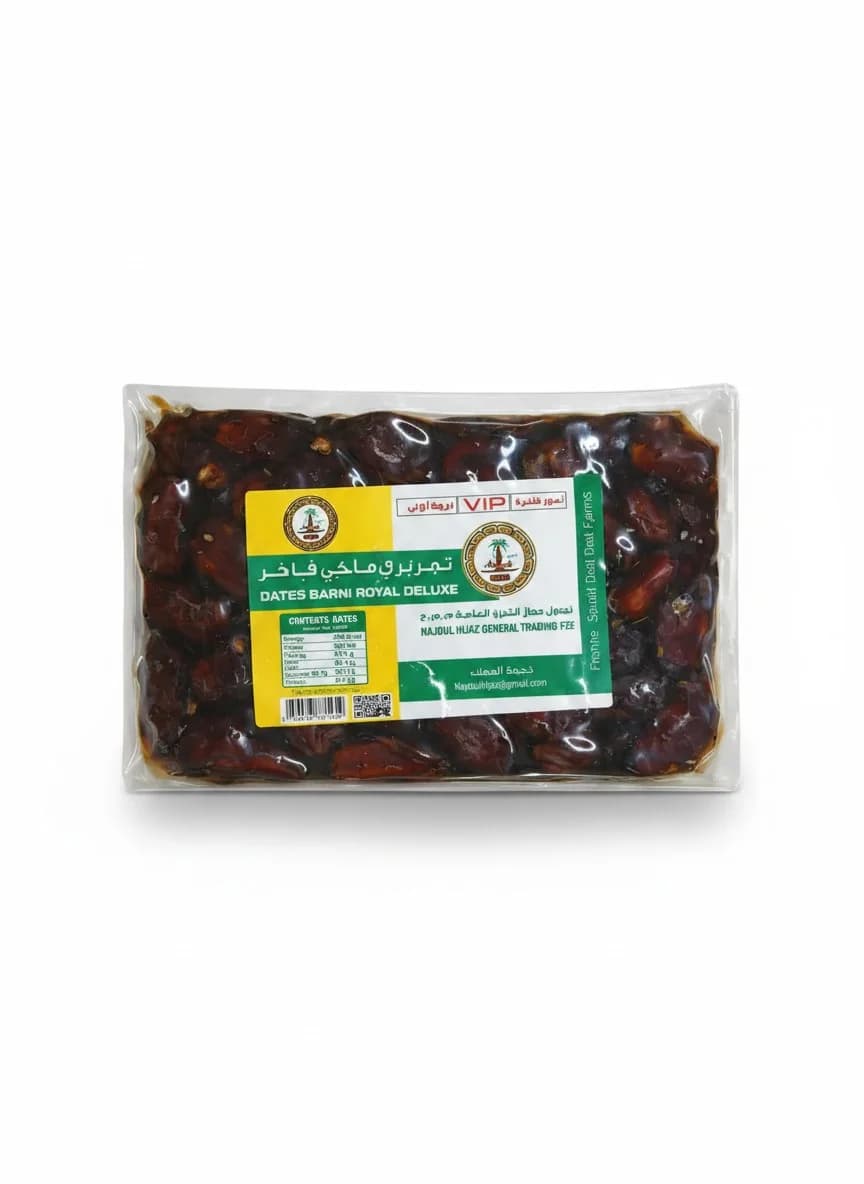
At SuqNaronane, we offer Barni Royal Deluxe Dates, a soft variety, generously sized, with sweet flesh and an easy-to-remove pit. They provide fiber, magnesium, and potassium, and also serve as a natural substitute for refined sugar in baking. A single box ordered gives you a year's supply of snacks, desserts, and small gifts to share at family celebrations.
All these products (basmati rice, vegetable ghee, cooking oils, milk powder, and dates) are available in our online catalogue, delivered directly to your door from Moroni. SuqNaronane is the reference Comorian grocery for the diaspora in France: authentic products, carefully selected, featuring the best brands from the Comorian market and the Indian Ocean.
Wedding pilao, a family m'tsolola, or simply your monthly pantry stock: our team in Moroni carefully selects and packages every order. Explore our full catalogue to find everything you need, from spices and beverages to canned goods and household products.