Comorian Spices: A Guide to Flavors and Uses
Discover why Comorian vanilla, clove and cinnamon stand out globally. This guide covers key spices, their culinary uses, and how to choose and store them.
What makes Comorian spices special?
Comorian spices owe their character to a singular geography. Sitting in the Mozambique Channel, the archipelago benefits from mineral-dense volcanic soil and constant humidity that favor aromatic crops. These conditions place the Comoros alongside other major Indian Ocean spice-producing regions, while local growing and drying practices give the islands' spices traits all their own.
Comorian bourbon vanilla, clove and cinnamon are among the archipelago's main crops. They are often grown on small family farms, where harvesting and drying remain largely artisanal. This traditional approach has a direct impact on the aromatic concentration of the finished products.
In terms of flavor, Comorian spices stand out for their marked intensity and aromatic complexity, shaped as much by the terroir as by the preparation methods. Slow drying, hand selection and minimal industrial processing all help preserve the natural essential oils found in the pods, flower buds and bark.
Finally, these spices belong to a blended culinary tradition shaped by centuries of trade between East Africa, the Arab world and South Asia. This cultural diversity explains why Comorian spices turn up in both sweet dishes and richly spiced savory dishes.
The main Comorian spices to know
Several Comorian spices stand out for their renown and frequent use in both local and international cooking. Here is an overview of the archipelago's most representative varieties.
Bourbon vanilla
Comorian bourbon vanilla is without doubt the archipelago's best-known spice. Its long, slender pod develops rounded aromas with a slightly smoky note after drying. It is used in pastry-making, in creamy desserts and to flavor certain hot drinks.
Clove
Clove comes from the dried flower bud of the clove tree. Its powerful, slightly peppery aroma makes it a common spice in spice blends, used in both slow-cooked dishes and infusions.
Cinnamon
Made from the dried bark of the cinnamon tree, Comorian cinnamon brings a warm, slightly sweet note. It features in many savory and sweet recipes, often paired with clove and vanilla in traditional preparations.
Pepper and turmeric
Local pepper, less well known abroad, stands out for its building heat and woody note. Turmeric, meanwhile, colors and flavors many dishes, adding a slightly earthy, bitter touch typical of Indian Ocean cuisines.
Spice · Part used · Aromatic profile · Main use
Bourbon vanilla · Dried pod · Rounded, sweet, slightly smoky · Pastry-making, desserts
Clove · Flower bud · Powerful, peppery · Slow-cooked dishes, infusions
Cinnamon · Bark · Warm, slightly sweet · Sweet and savory recipes
Pepper · Dried berry · Woody, building heat · General seasoning
Turmeric · Dried, ground rhizome · Earthy, slightly bitter · Rice, sauces, marinades
How to use Comorian spices in cooking
How Comorian spices are used depends on the dish and the cooking method. They work equally well in sweet and savory recipes, often paired with local ingredients such as coconut milk, citrus fruits or root vegetables.
In savory dishes, clove and turmeric frequently appear in marinades and coconut-based sauces, adding depth and color. Local pepper rounds out these bases with a spicy note that doesn't overpower the other flavors. These pairings echo techniques used across Indian Ocean cuisines, where spices are often dry-toasted before being added to a dish.
On the sweet side, vanilla remains the go-to ingredient for flavoring custards, cakes and certain hot drinks. Paired with vanilla, cinnamon adds extra warmth that works especially well in fruit- or milk-based desserts.
A few practical tips help you get the most out of these spices:
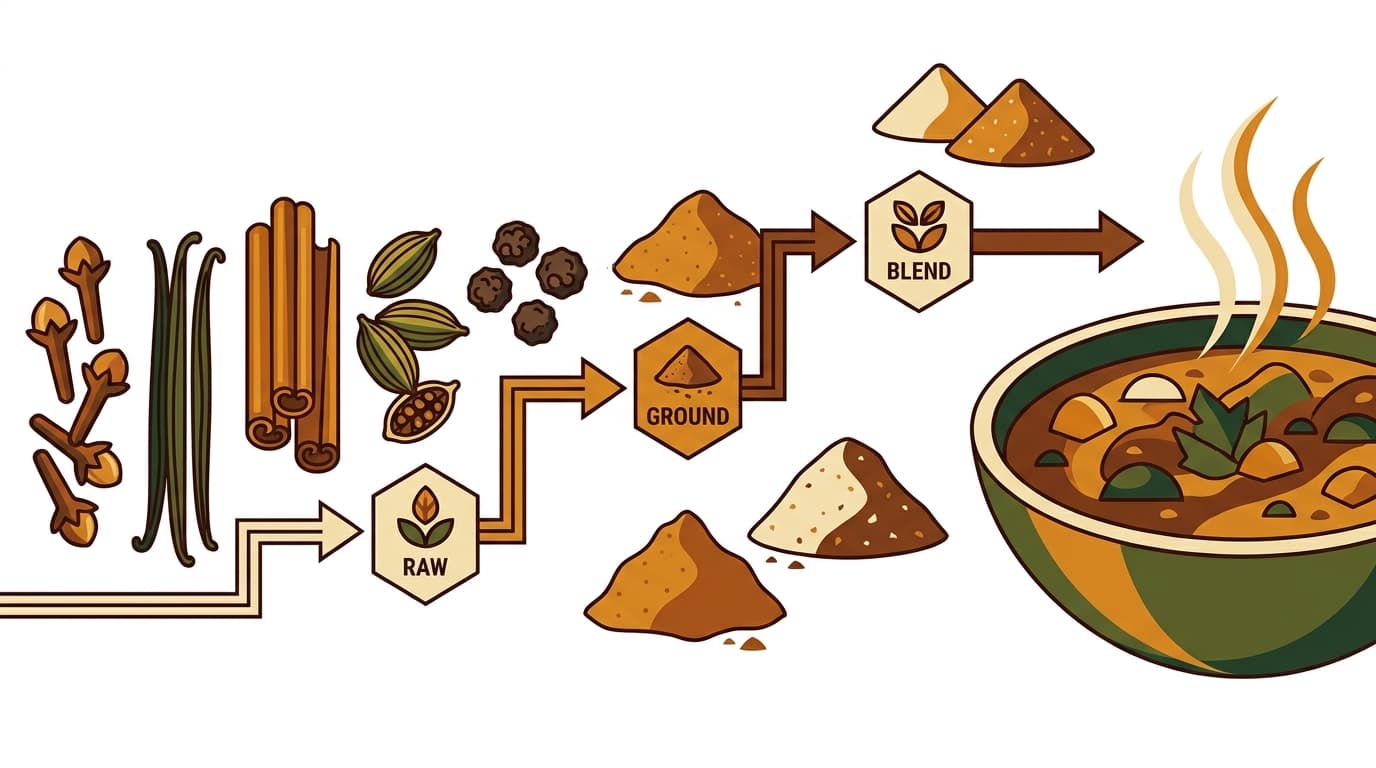
• Choose whole spices (pods, sticks, flower buds) and grind or infuse them just before use to preserve their aromas.
• Gently warm clove or cinnamon in fat before adding the other ingredients to release their essential oils.
• Add turmeric and pepper gradually, since their intensity can vary with origin and freshness.
• Pair vanilla with milk- or cream-based preparations to bring out its full aromatic roundness.
These spices also lend themselves to less classic uses, such as infusing hot drinks or flavoring homemade syrups, showing just how versatile the archipelago's products can be.
How to choose, store and buy Comorian spices
Choosing quality Comorian spices comes down to a few criteria you can check at the time of purchase. Color, smell and texture are good indicators: a supple, glossy vanilla pod, a well-formed, fragrant clove, or a brittle, aromatic cinnamon bark generally point to well-controlled drying.
Here are the main things to check before buying:
Criterion · What to look for
Appearance · Even color, no mold or suspicious spots
Smell · Clean, characteristic aroma of the spice, with no rancid notes
Texture · Supple for vanilla, cleanly brittle for cinnamon and clove
Origin · Clearly identified as coming from the Comoros archipelago
Packaging · Airtight packaging that protects against moisture and light
Storage has a direct impact on how long spices last and how strong their aroma stays. It is recommended to:
• Store spices in airtight containers, away from direct light and heat.
• Keep vanilla in a sealed jar, wrapped in parchment paper if needed, to prevent it from drying out.
• Avoid grinding whole spices too far ahead of use, since ground spices lose their aroma more quickly.
• Regularly check the appearance and smell of spices that have been stored for several months.
When it comes to buying, it's worth comparing the formats on offer (whole pods, powder, blends) as well as the traceability of the Comorian origin, a criterion often sought by fans of authentic products. Some online platforms specializing in food and grocery products carry these spices alongside other specialties from the archipelago. The flavors of the Comoros, delivered to your door offers a practical way to discover this range of products and continue exploring Comorian flavors beyond spices alone.
In short, choosing good Comorian spices comes down to paying attention to the product's appearance, smell and origin, while proper storage ensures their aromatic qualities last over time.
Frequently asked questions
- Whole or ground spices: which format should you choose?
- Whole spices generally keep their aroma better and can be ground just before use. They're especially well suited to slow-cooked dishes, marinades and infusions. Ground spices are handier for quickly seasoning a sauce, rice or dough. The choice comes down to how much time you have, the recipe, and how often you use Comorian spices.
- How can you recognize quality Comorian spices?
- Quality Comorian spices have a clean, characteristic smell, a natural color and a texture suited to their variety. They should be properly dry, with no signs of moisture, clumping or spoilage. For a packaged product, check the stated origin, composition, format, packaging integrity and traceability information. A weak scent or a vague label should make you cautious.
- How can you use Comorian vanilla in savory cooking?
- Comorian vanilla can add a soft, fragrant note to certain savory recipes, particularly with fish, seafood, poultry, squash or creamy sauces. Use it sparingly to complement other aromatics without making the dish taste sweet. A split pod can flavor a sauce or stock, while the seeds can be added directly to a dish.
- How do you dose Comorian spices without masking other flavors?
- Start with a small amount, especially when you're trying a new spice or blend. Add it gradually during cooking, then taste before adjusting the seasoning. Whole spices tend to release their aroma more slowly, while powders spread more quickly. Also take into account the other aromatics, the salt, the acidity and the cooking time.
- Are Comorian spices suited to vegetarian cooking?
- They fit easily into vegetarian cooking, since they bring out the flavors of vegetables, legumes, rice, grains and sauces. A combination of cinnamon, clove, pepper or other aromatics can add depth to a dish without using meat. To avoid an overly intense result, add the spices gradually and adjust them to the sweetness of the vegetables.
- What should you check on the label of a Comorian spice product?
- The label should clearly identify the spice's name, form, composition and stated origin. Also check any information on packaging, storage, traceability and potential allergens where it's provided. For an online purchase, also check the seller's information and the applicable terms before ordering, rather than relying on a photo alone.
Related reading
- Comorian Vanilla: The Green Gold of the ArchipelagoThe Comoros Islands rank among the world's top five vanilla producers. Discover what makes this spice so distinctive there.
- Comorian Cloves: The Spice with a Thousand VirtuesAs the world's second largest producer, the Comoros produce cloves known for their quality. A spice with millennia of culinary and medicinal uses.
- How to Cook Basmati Rice: The Foolproof MethodBasmati rice doesn't cook like ordinary rice: less water, less time, and two steps almost everyone skips. Rinsing, soaking, a 1:1.5 ratio and a 10-minute rest: here's the absorption method explained step by step, plus the pilaf, pasta, rice cooker and microwave variations, the mistakes that make grains stick, and how to rescue rice that went wrong.
- Tinned Sardines: The Complete Buying GuideA quality tin of sardines is judged by the origin of the fish, the type of sauce or oil, the vintage, and the fishing method. The best canned sardines are line-caught or purse-seine caught, packed in extra virgin olive oil, with a recent canning date. This guide covers the key criteria for choosing well, the available formats, and how to use canned sardines, so you can navigate the market with confidence.