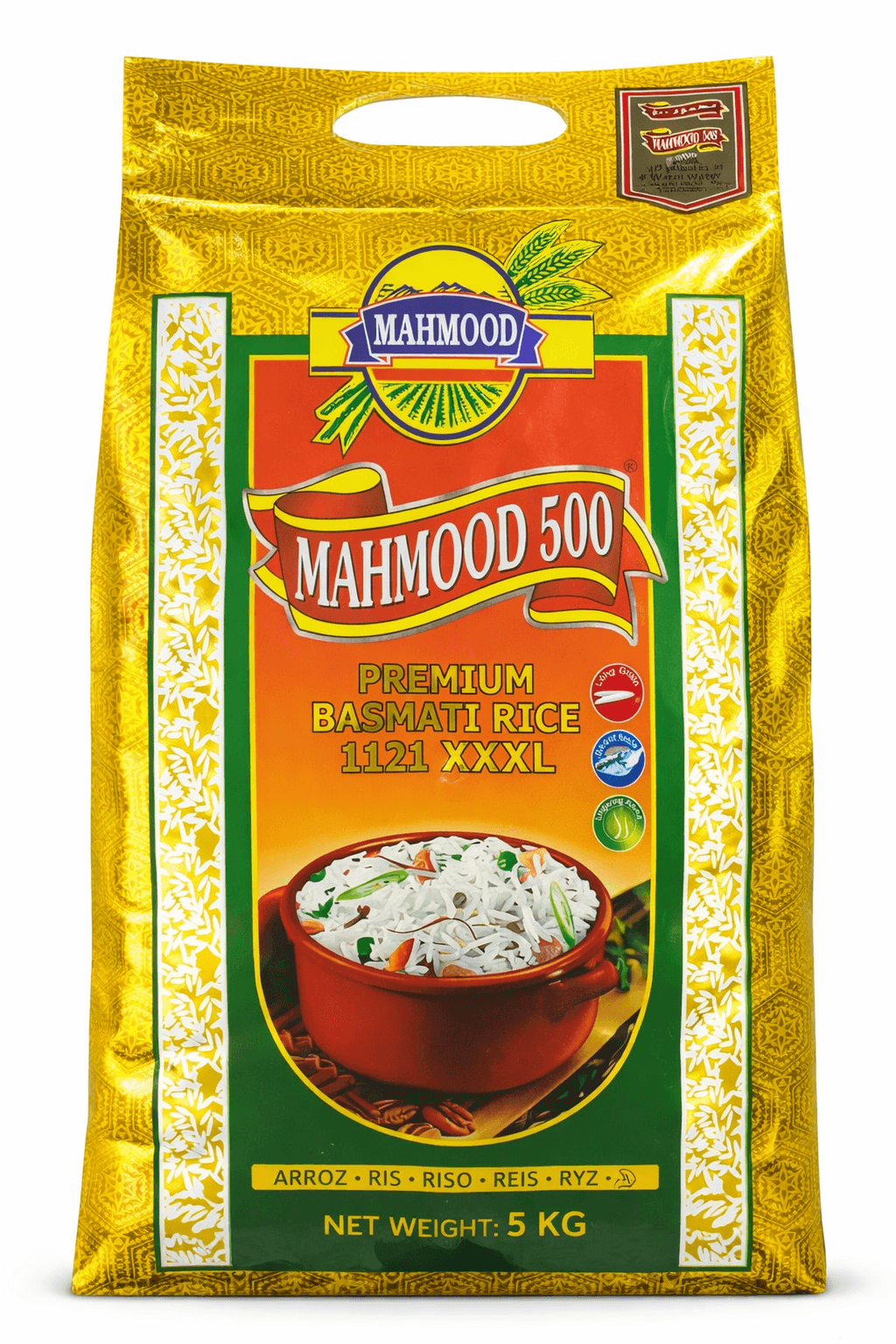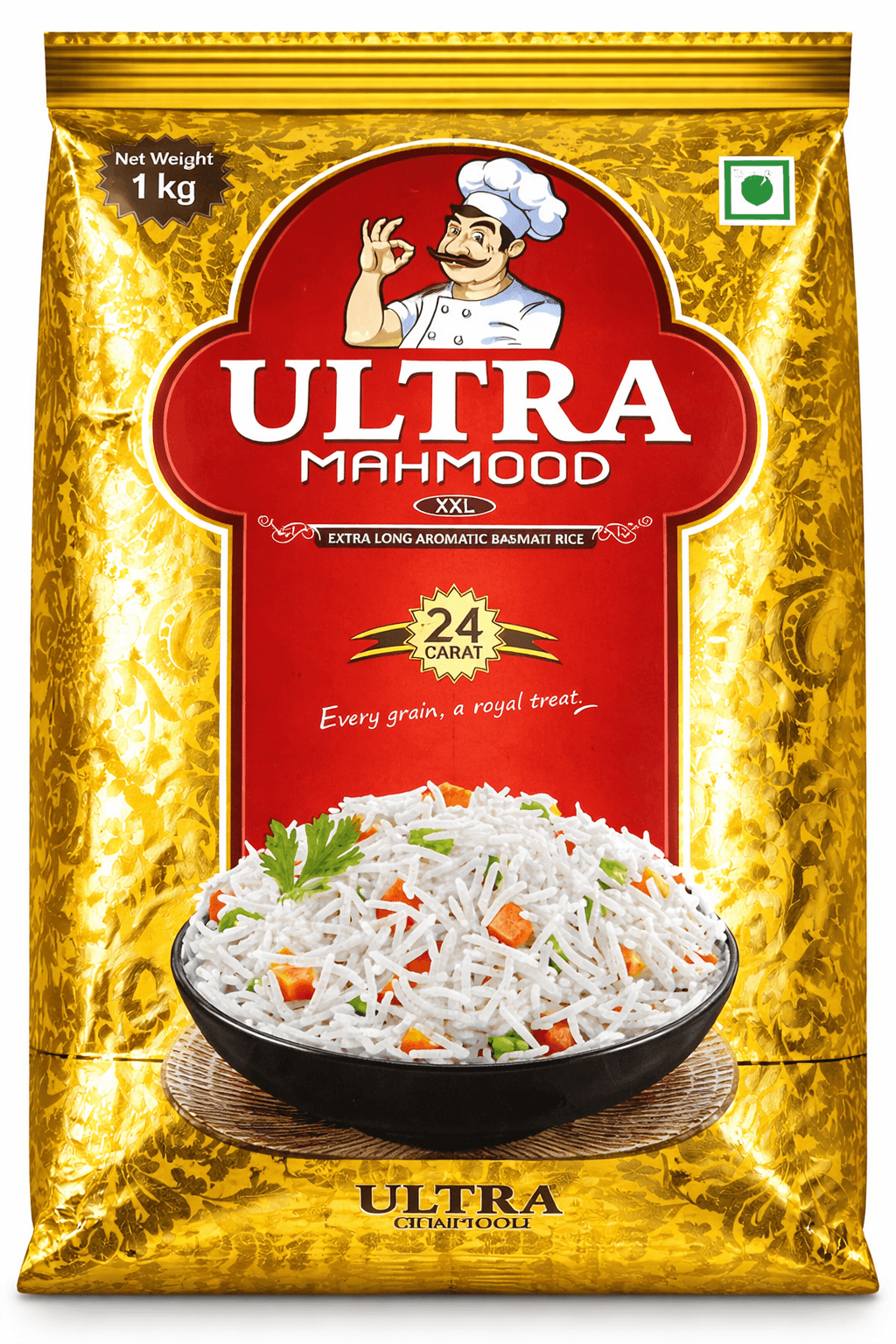
Mahmood 24 Carat XXL Ultra basmati rice
From
View product€3.39
3 sizes available
Everything about basmati rice: origin, characteristics, foolproof cooking methods, and pairings with Comorian dishes. The complete SuqNaronane guide.
Basmati rice has been cultivated for over 2,000 years in the Punjab plains, at the foothills of the Himalayas, on the border between Pakistan and northern India. Its name comes from Sanskrit 'vasmati,' meaning 'fragrant.' This etymology says it all: basmati is above all a rice with a distinctive aroma, recognizable from the moment it cooks by its floral, slightly nutty fragrance.
The most prized basmati varieties, such as Pusa Basmati 1121 or Basmati 370, are grown in specific regions, often at high altitudes, in well-drained soils irrigated by glacier meltwater. This unique terroir, combined with a post-harvest aging process (minimum 12 months), is what gives it its incomparable organoleptic qualities.
Basmati stands apart by several qualities that make it the world's benchmark rice. Its long, fine grains (up to 8 mm raw) elongate further during cooking to reach up to 15-17 mm. The resulting texture is light, non-sticky, with well-separated grains, a property due to its low amylopectin content and high amylose content.
Its glycemic index (GI 58) is lower than that of regular white rice (GI 72), making it a smart choice for those monitoring their blood sugar. The aromatic compound responsible for its characteristic fragrance is 2-acetyl-1-pyrroline, present at concentrations far higher than in other long-grain rice varieties. This molecule gives basmati its slightly floral popcorn-like scent that fills the kitchen while cooking.
The absorption method is the simplest and most reliable for perfect basmati. Begin by rinsing the rice several times in cold water until the water runs clear: this removes excess surface starch and prevents stickiness. Soak the rice for 20 to 30 minutes in cold water: this step is often overlooked but is essential for obtaining long, well-separated, unbroken grains.
Use a ratio of 1.5 volumes of water to 1 volume of rice. Bring salted water to a boil, add the drained rice, cover tightly, and reduce to the lowest heat. Cook for 10 to 12 minutes without lifting the lid. Turn off the heat and let rest 5 minutes, covered. Fluff gently with a fork. Result: long, airy, light grains with the unmistakable fragrance that distinguishes true basmati.
In the Comoros, rice is the staple food par excellence: it accompanies every meal. While local round rice is used daily, basmati holds a place of honor at important occasions: weddings, religious celebrations, and family gatherings. It is inseparable from pilao, the spiced rice dish of Comorian cuisine, cooked in a broth perfumed with cardamom, cloves, cinnamon, and cumin.
Basmati also pairs wonderfully with m'tsolola (Comorian meat curry), coconut-grilled fish, and vegetables sautéed with fresh ginger. Its lightness and non-stick properties make it a good match for broth-based sauces: it absorbs aromas without falling apart. On the sweet side, it features in desserts perfumed with Comorian vanilla, such as the creamy rice pudding served at major celebrations. It is this range of uses, savory and sweet alike, that explains basmati's place in Comorian cuisine.
Quality basmati is recognized by its long, fine, translucent grains, its delicate fragrance even when raw, and its uniformity: few broken grains or foreign matter. Be wary of very low prices, which often conceal blends with ordinary rice or grains from a recent, non-aged harvest. Aging of at least one year is essential to develop the texture and characteristic fragrance of true basmati.
At SuqNaronane, we exclusively select extra-long basmati aged a minimum of 12 months, imported directly from Pakistan and northern India. Each batch is inspected upon receipt to verify grain length, absence of breakage, and aromatic content. This is our commitment to genuine, traceable fine grocery products.