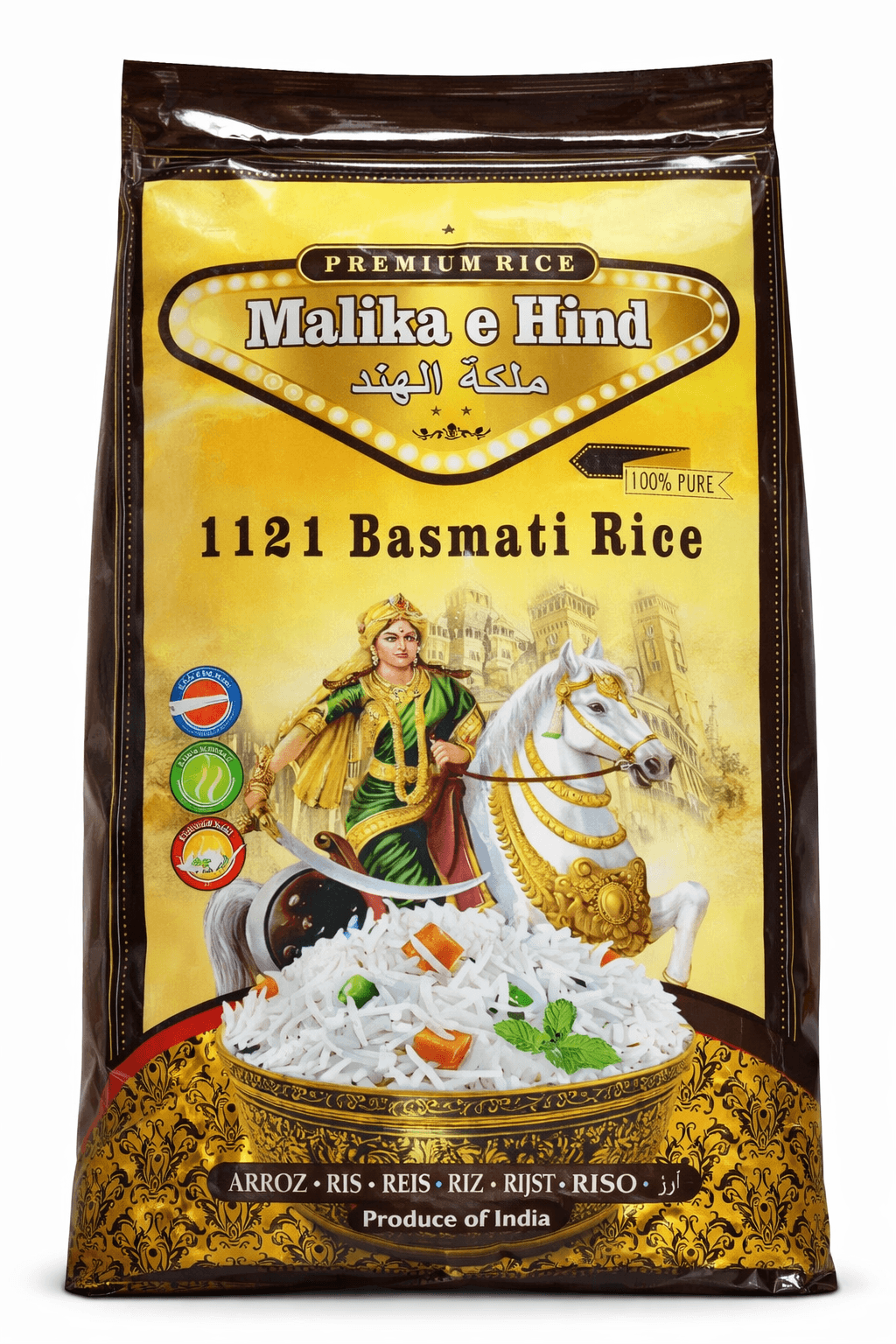
Malika e Hind 1121 basmati rice
From
View product€3.39
3 sizes available
Basmati rice prices in France in 2026: price ranges by bag size (1 to 20 kg), what drives the price, and pitfalls to avoid. SuqNaronane's pricing guide.
On the shelves of a Comorian grocery just as in a general supermarket, basmati rice is consistently priced higher than round rice or Thai fragrant rice. That gap is not arbitrary: it reflects a long, demanding production process. True basmati is grown at the foot of the Himalayas, in specific soils irrigated by glacier meltwater, then aged at least twelve months before being sold. This storage period ties up capital for exporters and explains a large share of the premium over rice consumed almost straight after harvest. As explained in our complete basmati rice guide, this aging process is the key to its non-sticky texture and signature fragrance.
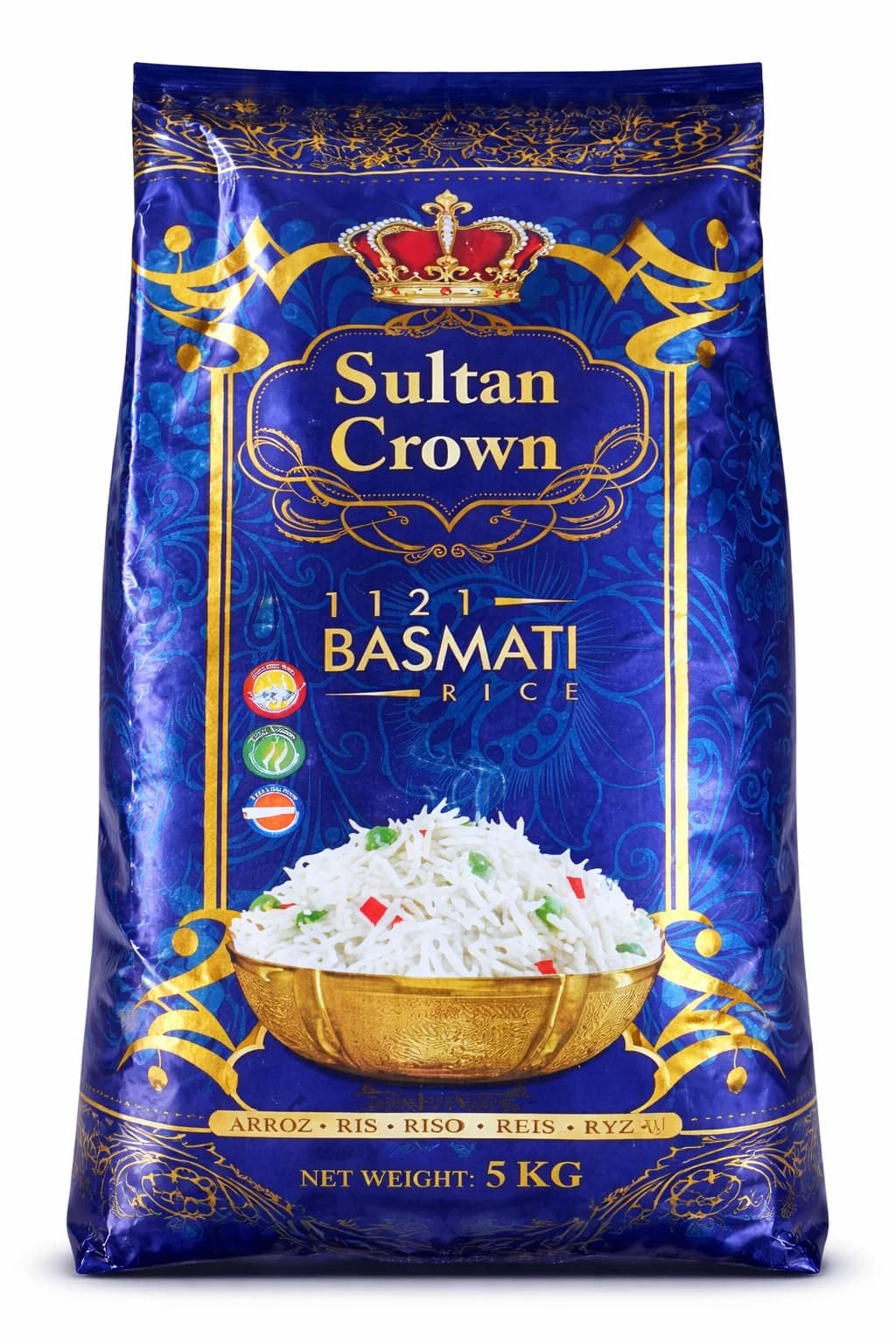
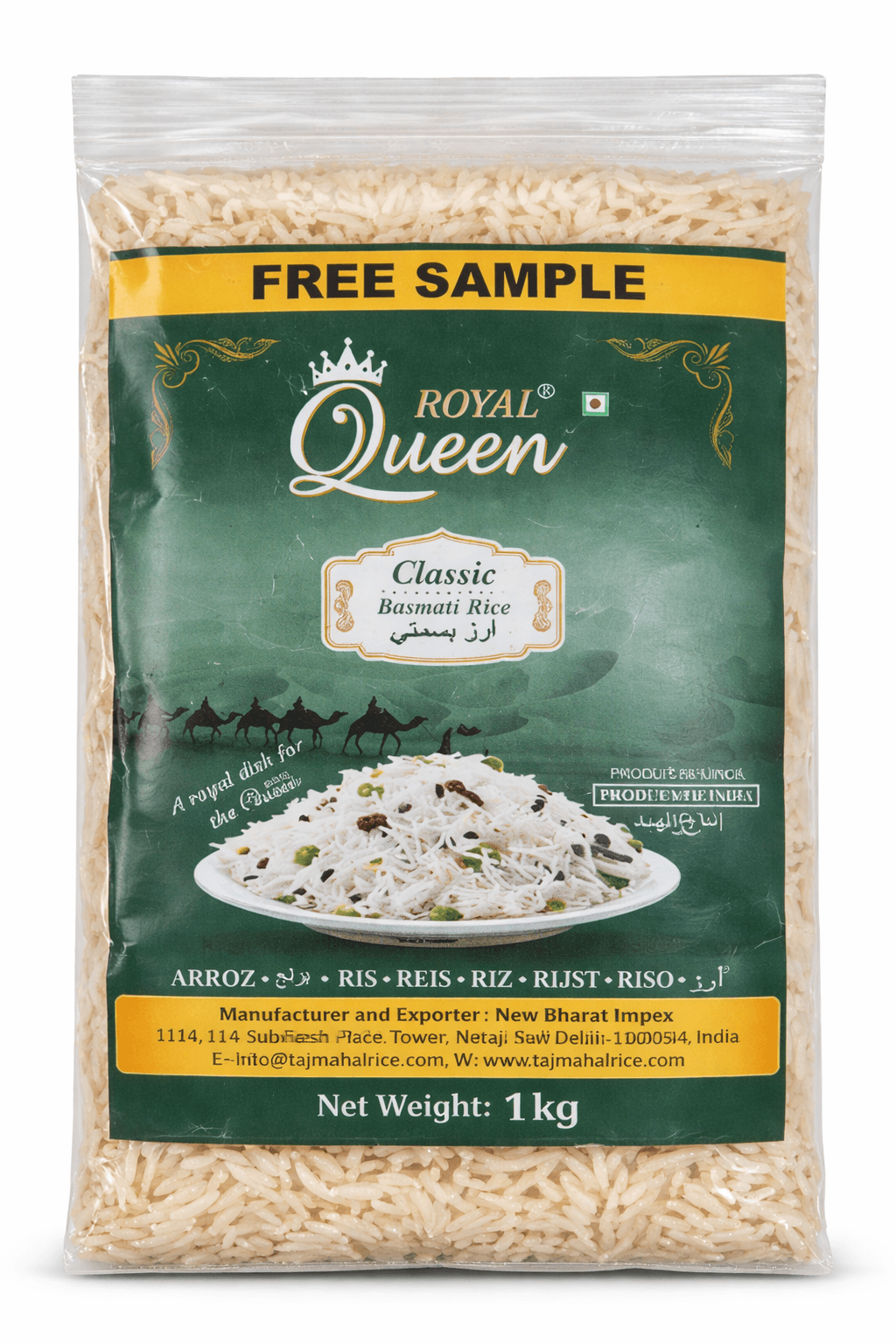
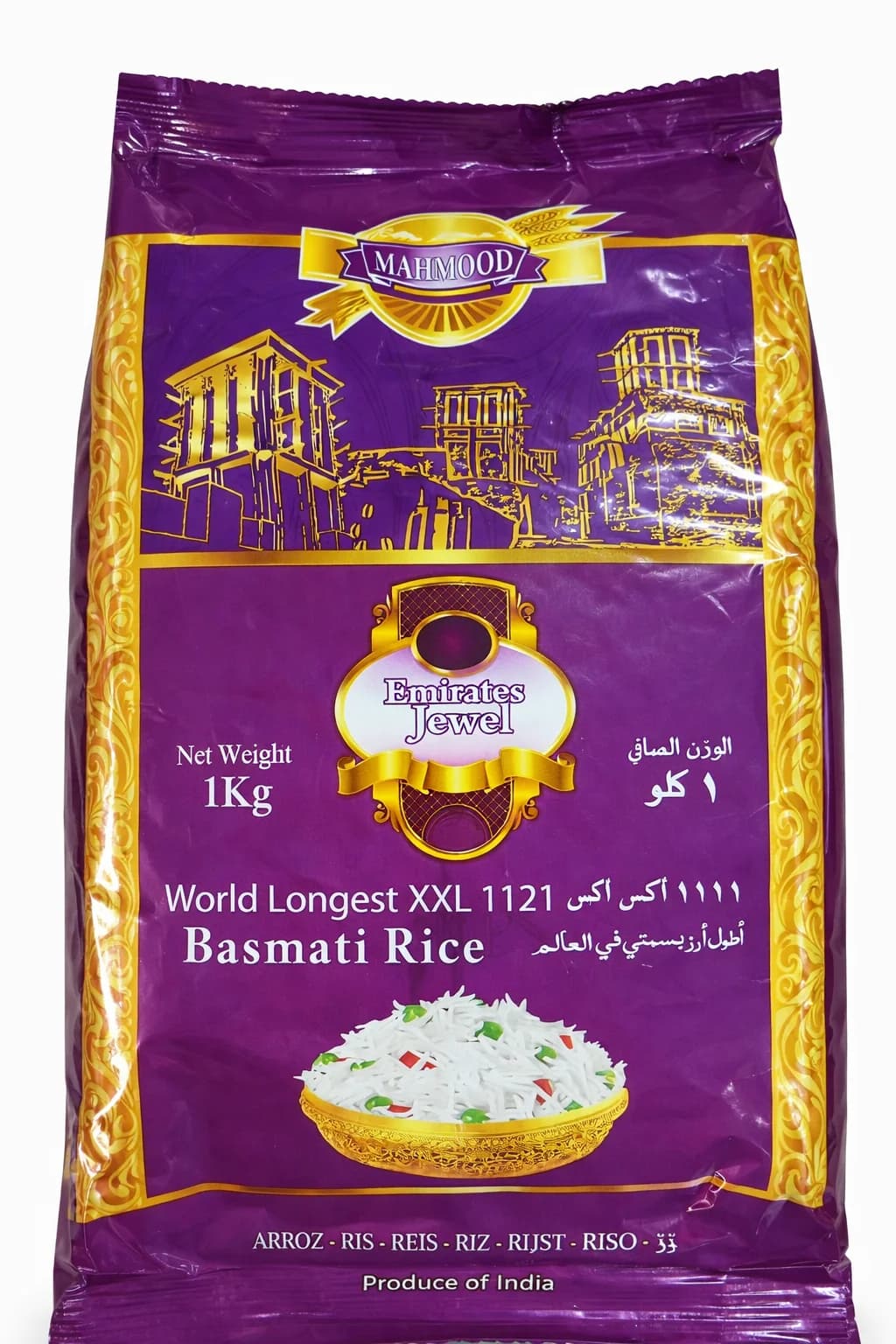
On top of that come the costs of importing from northern India or Pakistan: sea freight, customs duties, health inspections, and packaging adapted to the French market. Genuine extra-long basmati, properly aged and imported under good conditions, therefore naturally sits in a higher price bracket than rice stored for a long time in a local silo. At SuqNaronane, we own that positioning: our bags of Mahmood 1121 XXL, Sultan Crown 1121, Malika e Hind, or Royal Queen Classique are selected for consistent quality, not for the lowest possible price.
In France, a 1 kg bag of basmati rice typically runs between 3 and 6 euros depending on the brand and aging length, which is a relatively high price per kilo since it includes the fixed cost of individual packaging. The 5 kg format (the most common for a mid-size household) usually sells between 12 and 20 euros, bringing the per-kilo price notably below the small pack. It is the most rational entry format for trying a new brand without committing to a large volume.
The 10 kg bag, favored by large families and for major occasions (weddings, religious celebrations, pilao for a table of ten), generally costs between 22 and 35 euros, with a per-kilo price already well below the 5 kg format. The 20 kg bag, reserved for the biggest needs (shops, large families, bulk shipments to Moroni), usually ranges between 38 and 60 euros depending on the brand and variety (premium 1121 XXL or classic). This format consistently delivers the best price per kilo.
These ranges shift with harvests, exchange rates, and freight costs, but the order of magnitude stays stable from one season to the next. To compare real-time prices across available formats, the simplest option is to check our basmati rice catalogue: prices are shown by weight variant, with no surprises at checkout.
The first price factor is aging. A basmati aged twelve months structurally costs more than a recently harvested rice, because the exporter ties up stock for longer before selling it. This resting period reduces grain moisture, strengthens the fragrance, and improves cooking texture: the grains stay long, dry, and well separated instead of clumping. An unaged basmati, even if labeled 'basmati,' will produce a texture closer to ordinary rice, which is why abnormally low prices often hide insufficient aging.
The second factor is the variety. 1121, like our Mahmood 1121 XXL or Sultan Crown 1121, produces the longest grains on the market (up to 8 mm raw), which justifies a higher price than classic basmati varieties such as Malika e Hind or Royal Queen Classique. The latter remain excellent everyday basmati, with a genuine fragrance and good texture, but slightly shorter grains. The choice between 1121 and classic therefore depends on use: major occasions and refined presentation for 1121, everyday cooking for classic.
Finally, origin plays a role. Indian basmati (Punjab, Haryana) and Pakistani basmati (the Pakistani Punjab valleys) share the same historic Himalayan terroir and show comparable prices at equivalent quality and aging. Price gaps between origins come more from import routes and volumes negotiated by the importer than from any intrinsic quality difference. What really matters when buying remains the variety, grain length, and aging duration stated on the bag.
Comparing two bags of basmati rice purely on their sticker price is a classic mistake. The only relevant indicator is the price per kilo, which often reveals significant gaps between formats of the same brand. A 1 kg bag at 5 euros works out to 5 euros per kilo, while a 20 kg bag at 50 euros works out to 2.50 euros per kilo: half the price for a strictly identical product. This difference comes from spreading the fixed packaging cost and from the preferential rates suppliers grant on large formats.
For a Comorian family eating basmati several times a week (daily meals, Friday pilao, big weekend tables), the 20 kg bag is almost always the most rational economic choice, provided storage is dry and airtight. Well-stored basmati rice (sealed container, away from moisture and pests) keeps its qualities for several months without issue. The higher upfront cost pays for itself quickly once consumption goes beyond a few kilos per month. Browse all available formats in our online catalogue.
An unusually low price on a bag labeled 'basmati' should raise a flag. The most common practice is blending a percentage of genuine basmati with cheaper ordinary long-grain rice, often visually similar but lacking the fragrance and cooking texture of real basmati. This blend, sometimes called a 'basmati blend' in some markets, does not meet the grain-length and 2-acetyl-1-pyrroline standards (the aromatic compound in basmati) and produces shorter, stickier, less fragrant grains once cooked.
Another red flag: rice sold as basmati but not aged, recognizable by grains that stay short even after cooking and a faint smell when raw. To avoid these pitfalls, favor brands with a clearly stated origin (northern India or Pakistan), an aging claim, and a price consistent with market ranges. A gap of more than 30% below the average per-kilo price is almost always a sign of compromised quality rather than a good deal.
At SuqNaronane, every bag (whether Mahmood 1121 XXL, Sultan Crown 1121, Malika e Hind, or Royal Queen Classique) is aged at least twelve months and inspected on arrival to check grain length and the absence of broken grains. To go further and place basmati rice within a Comorian family's full shopping basket in France, see our guide to essential ingredients in Comorian cooking.