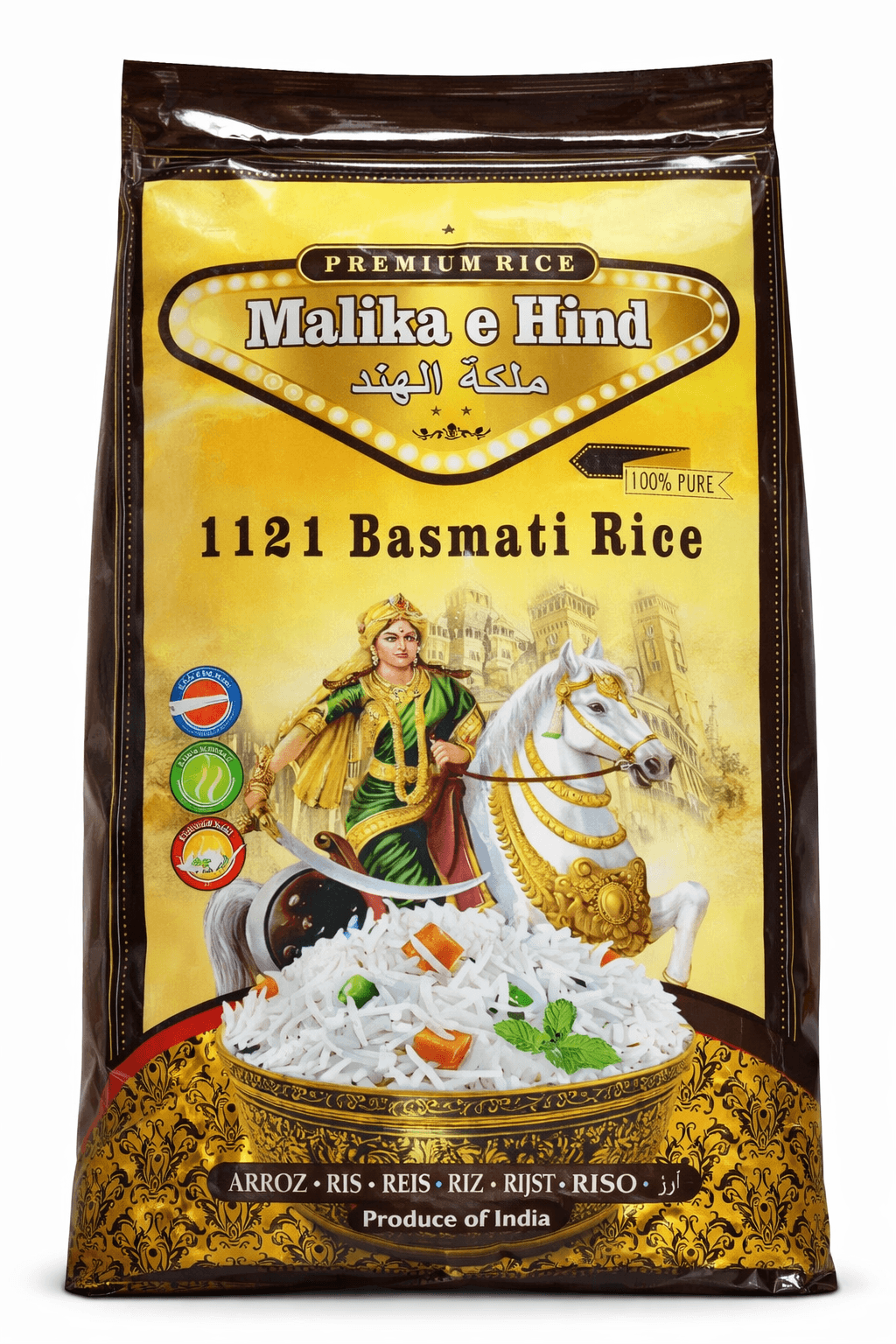
Riz basmati 1121 Malika e Hind
À partir de
Voir le produit3,39 €
3 formats disponibles
Prix du riz basmati en France en 2026 : fourchettes par sac (1 à 20 kg), facteurs de prix et pièges à éviter. Le guide tarifs de SuqNaronane.
Dans les rayons d'une épicerie comorienne comme dans un supermarché généraliste, le riz basmati affiche systématiquement un prix supérieur au riz rond ou au riz parfumé thaï. Cet écart n'est pas arbitraire : il reflète un processus de production long et exigeant. Le basmati vrai est cultivé au pied de l'Himalaya, sur des sols spécifiques irrigués par l'eau de fonte des glaciers, puis vieilli au minimum douze mois avant d'être commercialisé. Ce temps de stockage immobilise du capital pour les exportateurs et justifie une part importante du surcoût par rapport à un riz consommé quasiment dès la récolte. Pour comprendre en détail ce processus, consultez notre guide complet du riz basmati : ce vieillissement est la clé de sa texture non collante et de son parfum caractéristique.
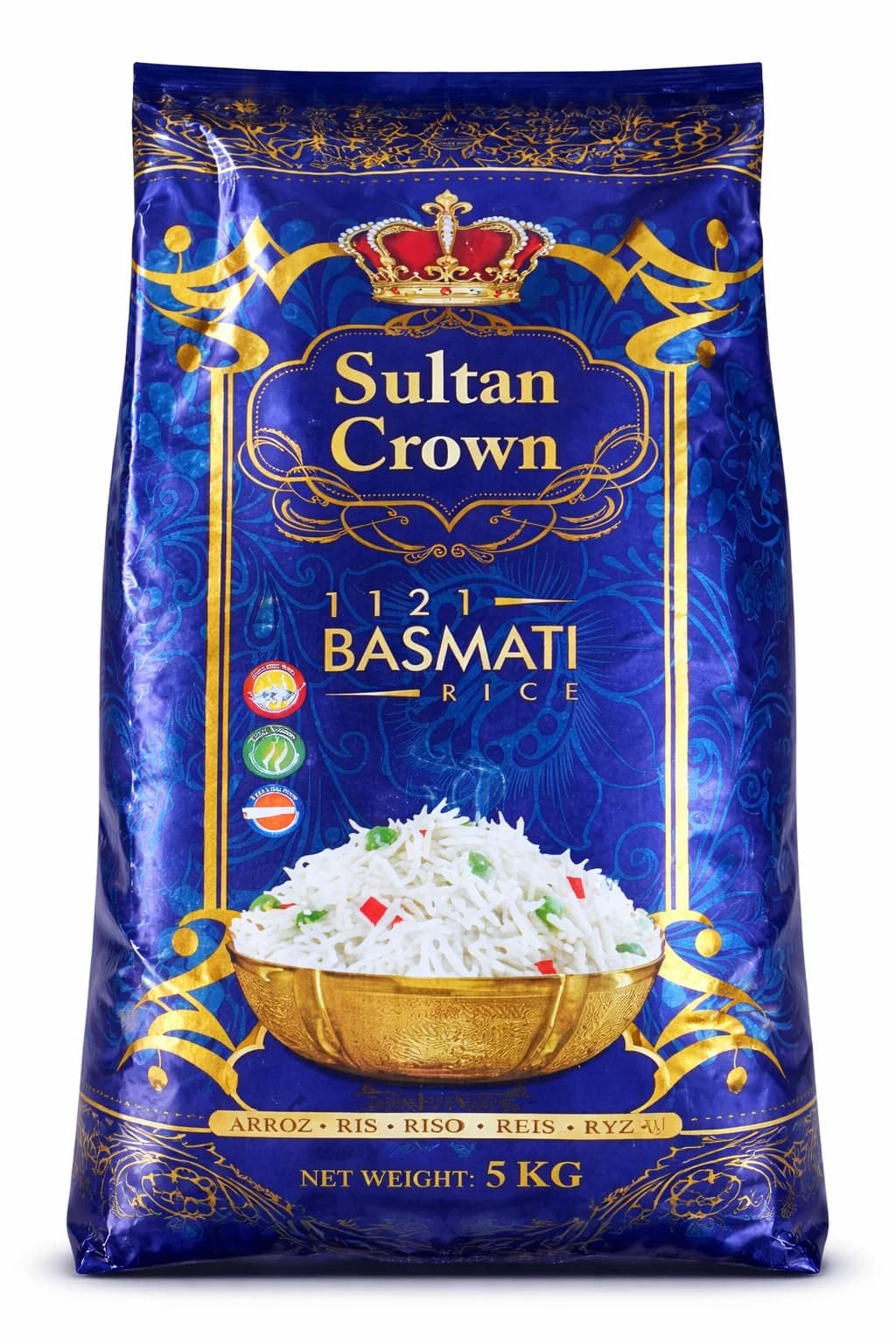
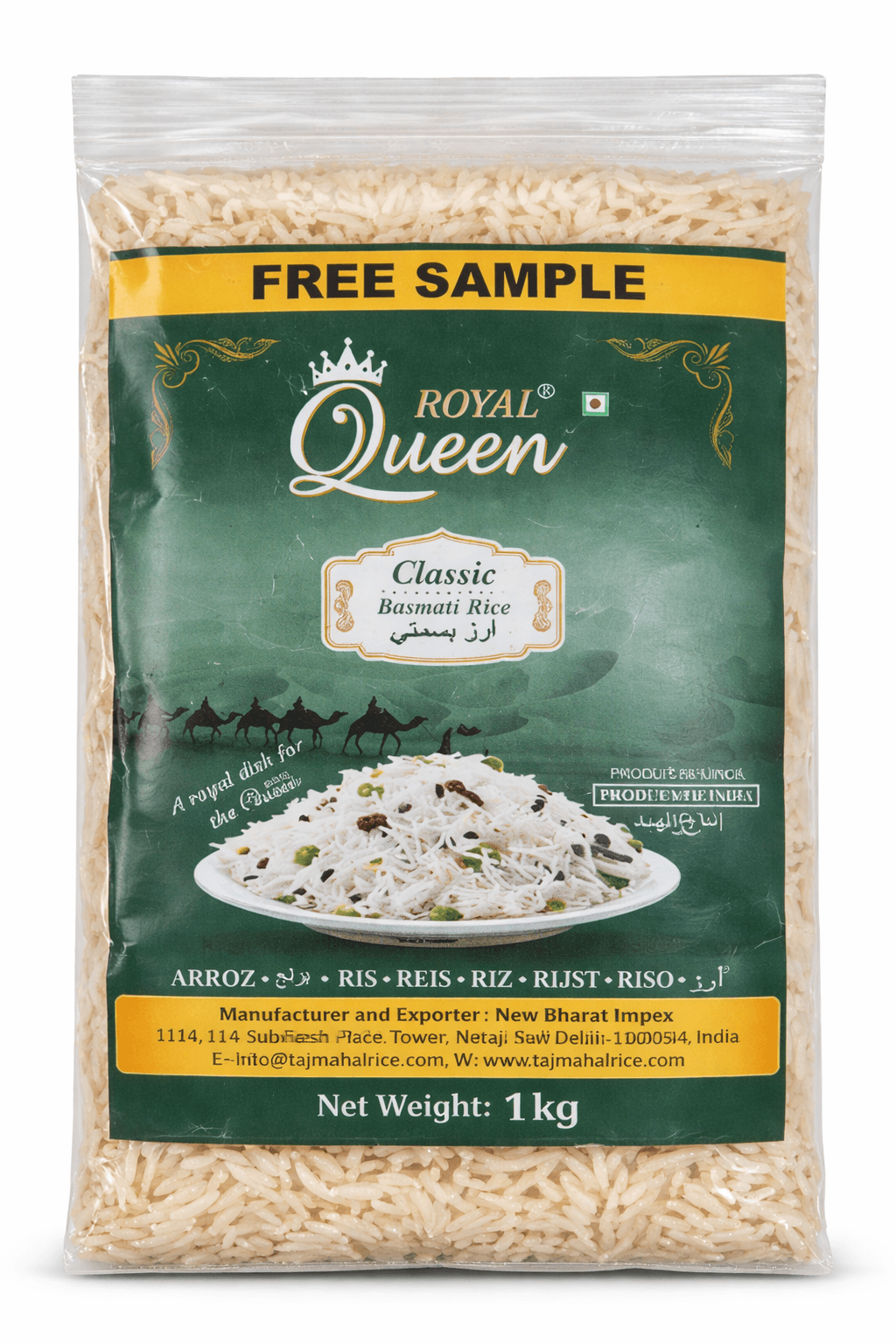
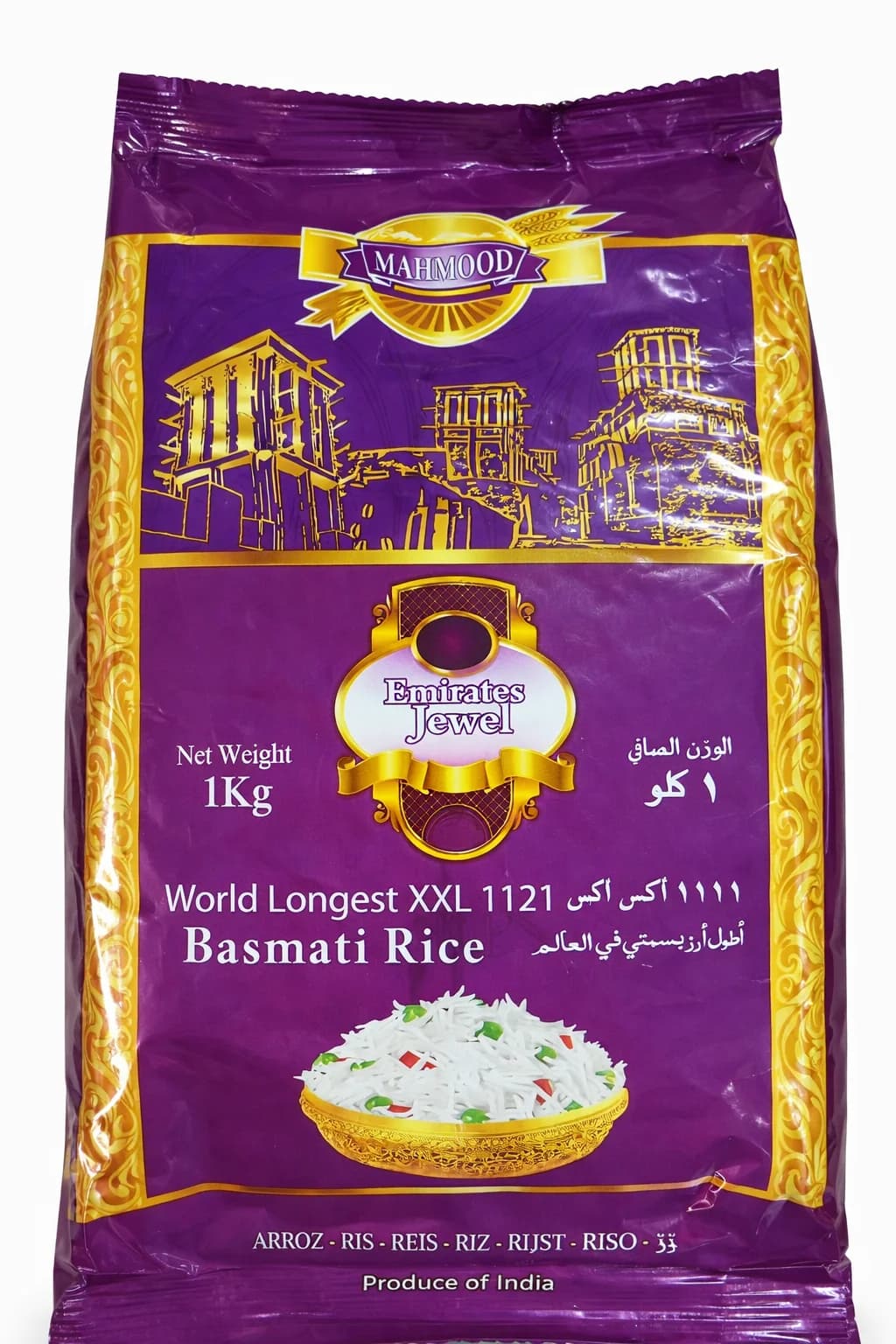
À cela s'ajoutent les coûts d'importation depuis l'Inde du Nord ou le Pakistan : fret maritime, droits de douane, contrôles sanitaires et conditionnement en sacs adaptés au marché français. Un basmati extra-long authentique, correctement vieilli et importé dans de bonnes conditions, se situe donc naturellement dans une fourchette plus élevée qu'un riz longtemps stocké en silo local. Chez SuqNaronane, nous assumons ce positionnement : nos sacs de Mahmood 1121 XXL, Sultan Crown 1121, Malika e Hind ou Royal Queen Classique sont sélectionnés pour leur qualité constante, pas pour leur prix plancher.
En France, un sac de riz basmati de 1 kg se situe généralement entre 3 et 6 euros selon la marque et la longueur de vieillissement, soit un prix au kilo relativement élevé car il inclut le coût fixe de l'emballage individuel. Le format 5 kg (le plus courant pour un foyer de taille moyenne) se négocie le plus souvent entre 12 et 20 euros, ce qui ramène le prix au kilo nettement en dessous du petit conditionnement. C'est le format d'entrée le plus rationnel pour découvrir une nouvelle marque sans investir dans un gros volume.
Le sac de 10 kg, plébiscité par les familles nombreuses et pour les grandes occasions (mariages, fêtes religieuses, pilao pour une tablée de dix personnes), coûte en général entre 22 et 35 euros, avec un prix au kilo déjà bien inférieur au format 5 kg. Le sac de 20 kg, réservé aux plus gros besoins (commerces, grandes familles, envois en gros vers Moroni), se situe généralement entre 38 et 60 euros selon la marque et la variété (1121 XXL premium ou classique). C'est le format qui offre systématiquement le meilleur prix au kilo.
Ces fourchettes évoluent selon les récoltes, le taux de change et les coûts de fret, mais l'ordre de grandeur reste stable d'une saison à l'autre. Pour comparer les tarifs en temps réel sur les formats disponibles, le plus simple reste de consulter notre catalogue de riz basmati : les prix y sont affichés par variante de poids, sans surprise au moment du paiement.
Le premier facteur de prix est le vieillissement. Un basmati vieilli douze mois coûte structurellement plus cher qu'un riz de récolte récente, car l'exportateur immobilise son stock plus longtemps avant de le vendre. Ce temps de repos réduit l'humidité du grain, renforce son parfum et améliore sa tenue à la cuisson : les grains restent longs, secs et bien séparés au lieu de coller. Un basmati non vieilli, même vendu sous une appellation « basmati », donnera une texture plus proche du riz ordinaire, ce qui explique pourquoi certains prix anormalement bas cachent souvent un vieillissement insuffisant.
Le deuxième facteur est la variété. Le 1121, comme notre Mahmood 1121 XXL ou notre Sultan Crown 1121, produit les grains les plus longs du marché (jusqu'à 8 mm à cru), ce qui justifie un prix plus élevé que les variétés basmati classiques comme Malika e Hind ou Royal Queen Classique. Ces dernières restent d'excellents basmati au quotidien, avec un parfum réel et une bonne tenue, mais des grains légèrement plus courts. Le choix entre 1121 et classique dépend donc de l'usage : grandes occasions et présentation soignée pour le 1121, cuisine du quotidien pour le classique.
Enfin, l'origine joue un rôle. Le basmati indien (Pendjab, Haryana) et le basmati pakistanais (vallées du Pendjab pakistanais) partagent le même terroir himalayen historique et affichent des prix comparables à qualité et vieillissement équivalents. Les écarts de prix entre origines viennent davantage des circuits d'importation et des volumes négociés par l'importateur que d'une différence de qualité intrinsèque. Ce qui compte réellement à l'achat reste la variété, la longueur du grain et la durée de vieillissement affichées sur le sac.
Comparer deux sacs de riz basmati uniquement sur leur prix affiché est une erreur classique. Le seul indicateur pertinent est le prix au kilo, qui révèle souvent des écarts significatifs entre formats d'une même marque. Un sac de 1 kg à 5 euros revient à 5 euros le kilo, tandis qu'un sac de 20 kg à 50 euros revient à 2,50 euros le kilo : deux fois moins cher pour un produit strictement identique. Cette différence s'explique par la dilution du coût fixe de l'emballage et par les tarifs préférentiels que les fournisseurs accordent sur les gros conditionnements.
Pour une famille comorienne qui consomme du basmati plusieurs fois par semaine (quotidien, pilao du vendredi, grandes tablées du week-end), le sac de 20 kg est presque toujours le choix le plus rationnel économiquement, à condition de disposer d'un espace de stockage sec et hermétique. Le riz basmati bien conservé (contenant fermé, à l'abri de l'humidité et des nuisibles) garde ses qualités plusieurs mois sans problème. L'investissement initial plus élevé se rentabilise rapidement dès que la consommation dépasse quelques kilos par mois. Retrouvez tous les formats disponibles dans notre catalogue en ligne.
Un prix anormalement bas sur un sac étiqueté « basmati » doit alerter. La pratique la plus courante consiste à mélanger un pourcentage de basmati véritable avec du riz long grain ordinaire moins cher, souvent une variété proche visuellement mais sans le parfum ni la tenue à la cuisson du vrai basmati. Ce mélange, parfois appelé « basmati blend » sur certains marchés, ne respecte pas les standards de longueur de grain et de teneur en 2-acétyl-1-pyrroline (le composé aromatique du basmati) et donne à la cuisson des grains plus courts, plus collants et moins parfumés.
Autre signal d'alerte : un riz vendu comme basmati mais non vieilli, reconnaissable à des grains qui restent courts même après cuisson et à une odeur peu marquée à cru. Pour éviter ces pièges, privilégiez des marques identifiées avec une origine claire (Inde du Nord ou Pakistan), une mention de vieillissement, et un prix cohérent avec les fourchettes du marché. Un écart de plus de 30 % en dessous du prix moyen constaté au kilo est presque toujours le signe d'une qualité compromise plutôt que d'une bonne affaire.
Chez SuqNaronane, chaque sac (qu'il s'agisse du Mahmood 1121 XXL, du Sultan Crown 1121, du Malika e Hind ou du Royal Queen Classique) est vieilli au minimum douze mois et contrôlé à réception pour vérifier la longueur des grains et l'absence de brisures. Pour approfondir le sujet et replacer le riz basmati dans l'ensemble du panier type d'une famille comorienne en France, consultez notre guide des ingrédients essentiels de la cuisine comorienne.